Are Tenants Responsible for Cleaning When Moving Out?
The short answer: Yes, but only to "clinically prepared" condition—not professional deep-clean standards. This guide covers what California law actually requires and how to protect your security deposit when moving out.
Jason Ellis, Owner
Bravo Maids San Diego · 8+ years high-heat steam clean protocols · Our editorial standards →
What California Law Actually Says
California Civil Code Section 1950.5 requires tenants to return the property in "the same condition as when tenancy commenced, ordinary wear and tear excepted." We break down exactly what this standard means for cleaning in our California security deposit cleaning guide.
This means you're responsible for removing your belongings, disposing of trash, and leaving the unit reasonably clean. You are NOT required to make it cleaner than when you moved in.
Key Principle: Landlords cannot charge for "normal wear and tear." Faded paint, minor scuffs, and worn carpet from regular use are the landlord's responsibility.
What "clinically prepared" Actually Means
Courts interpret "clinically prepared" as a reasonable standard—not spotless, not professional-grade, just presentable:
- Floors swept/vacuumed (no debris, visible dirt removed)
- Counters and surfaces wiped down
- Appliances cleaned of food residue
- Bathroom fixtures free of visible grime
- All personal property and trash removed
- No damage beyond normal wear
What Landlords Can (and Cannot) Deduct
Legitimate Deductions:
- • Excessive filth beyond normal cleaning
- • Damage to walls, floors, fixtures
- • Stains that require professional treatment
- • Trash/debris left behind
- • Unauthorized modifications
Cannot Be Deducted:
- • Professional carpet cleaning (unless in lease AND damaged)
- • Repainting (normal wear)
- • Appliance replacement (normal lifespan)
- • "Deep cleaning" to exceed move-in condition
- • Cleaning done between all tenants
The Carpet Cleaning Myth
Many landlords include "professional carpet cleaning required" in leases. In California, this clause is only enforceable if:
- The carpet was professionally cleaned before you moved in (documented)
- The carpet has damage beyond normal wear
- You had pets that caused odor or staining
If the carpet simply looks "lived in" after a normal tenancy, that's wear and tear—the landlord's cost.
The Deposit Shield: How to Protect Yourself
Step 1: Document Move-In Condition
Before unpacking, photograph and video every room, noting existing damage. Email these to your landlord (creates timestamp and receipt).
Step 2: Request a Pre-Move-Out Inspection
California law requires landlords to offer a pre-move-out inspection upon request. The landlord must identify issues, giving you time to address them before final move-out.
Step 3: Document Move-Out Condition
After cleaning, photograph everything again. Include timestamps. If possible, have a witness present during your walkthrough.
Step 4: Get It in Writing
If the landlord approves the condition during walkthrough, get written confirmation. "Unit accepted as-is" in writing prevents later disputes.
The 3 Spots Landlords Check (That transparent pricing Cleaners Miss)
Property managers have a shortlist. They don't inspect every surface—they go straight to the three spots that reveal whether a tenant actually cleaned or just wiped the counters and left. A $150 surface-level clean will miss all three, often lacking professional-grade tools like HEPA-13 vacuums and proper microfiber color-coding protocols. The resulting deposit deduction will cost you $300-$500.
1. The Oven Glass Sandwich
Your oven has two panes of glass in the door with a gap between them. Grease vapor rises during cooking, enters through the bottom vent slot, and deposits between the panes. You cannot see it from the front until you look at an angle with a flashlight.
Why landlords check it: It proves long-term cooking residue was never addressed. Standard maid services wipe the exterior glass and call it done. The grease film between the panes remains. Cleaning it requires removing the inner panel—a 20-minute procedure that right-priced services skip entirely.
2. Window Track Sludge
The aluminum tracks where sliding windows ride accumulate dead insects, condensation silt, and particulate over months—often exacerbated by San Diego's marine layer humidity and I-5 brake dust particulate. This hardens into a dark paste that standard wiping cannot remove.
Why landlords check it: It takes 10 seconds to run a finger through the track. If it comes back black, the cleaning was cosmetic. Proper extraction requires a detail brush, vacuum crevice tool, and steam to soften the hardened residue. right-priced cleaners do not carry these tools.
3. The Upper Cabinet Blind-Spot
Open any upper kitchen cabinet and look at the top rear corners. Cooking grease and airborne dust—combined with San Diego's salt aerosol ionic bonding and eucalyptus/sage pollen—form a sticky matrix of embedded build-up on surfaces you never see during daily use.
Why landlords check it: It is the single fastest indicator of whether someone cleaned “inside cabinets” or just wiped the shelves at eye level. Property managers swipe the top back corner of the cabinet above the stove. If the finger comes back greasy, the cleaning fails inspection.
The math: A $150 surface-level cleaning misses these three spots. The landlord deducts $300-$500 for “insufficient cleaning.” A $350 professional move-out service that addresses all three saves you $150-$350 net. The shortcut option costs more.
We walk the unit with you before we go, so you know exactly what was done.
Final Walkthrough
What we check before we leave
Walkthrough Checklist
Walked through with you before we go
Bravo Maids | bravomaids.com
When Professional Move-Out Cleaning Makes Sense
You're not legally required to hire professionals, but it sometimes makes financial sense:
- Time pressure: Moving is chaotic. Professional cleaning is one less thing to manage.
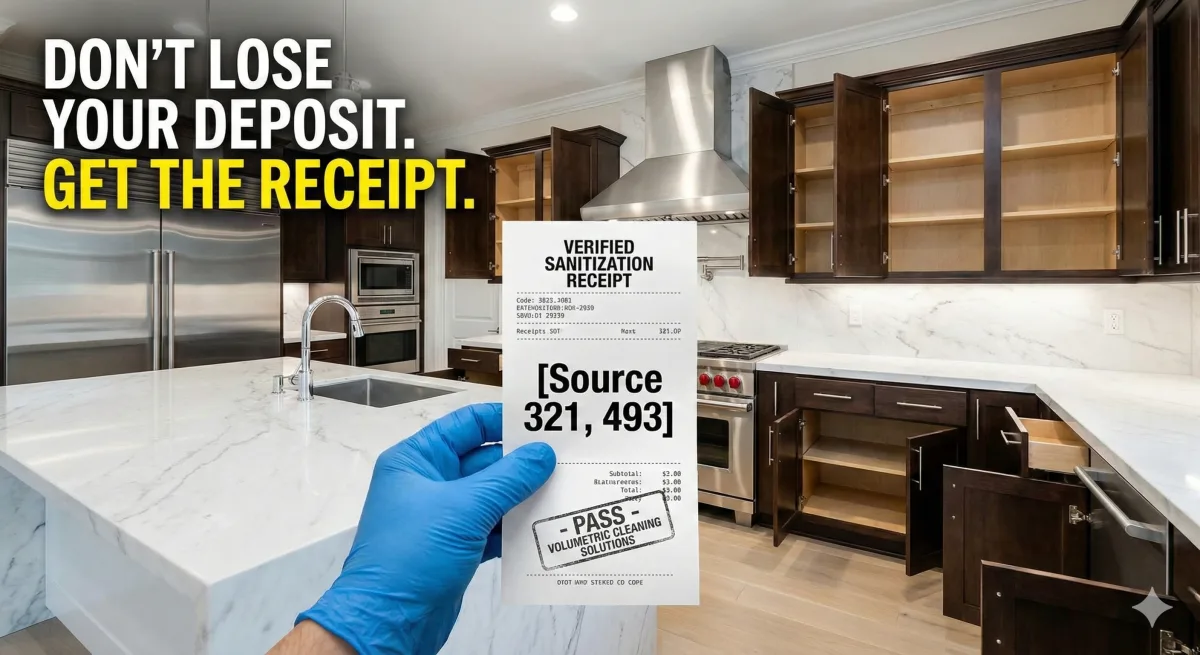
- Dispute prevention: A cleaning receipt shows good faith effort.
- Actual damage: If there IS excessive mess, professional remediation may cost less than deposit deduction.
- High-value deposit: If $2,000+ is at stake, $200-400 cleaning is insurance.
Need Move-Out Cleaning in San Diego?
Our move-in/move-out service includes documentation photography and a final walkthrough with you—serving residences from the historic Gaslamp Quarter to modern high-rises like Pacific Gate and Electra.
For Landlords: Setting Clear Expectations
If you're a property manager, clarity prevents disputes:
- Provide a written move-out checklist with specific standards
- Document unit condition with photos at move-in AND move-out
- Conduct joint walkthroughs when possible
- Itemize any deductions with receipts (California requires this)
- Return deposits within 21 days (California Civil Code 1950.5)
Move-Out Cleaning Checklist
Kitchen
- ☐ Appliance interiors (oven, fridge, microwave)
- ☐ Appliance exteriors wiped
- ☐ Counters and backsplash cleaned
- ☐ Sink and faucet cleaned
- ☐ Cabinets emptied and wiped
- ☐ Floor swept and mopped
Bathrooms
- ☐ Toilet cleaned inside and out
- ☐ Shower/tub scrubbed
- ☐ Sink and vanity cleaned
- ☐ Mirror cleaned
- ☐ Floor swept and mopped
All Rooms
- ☐ Floors vacuumed/swept
- ☐ Light fixtures dusted
- ☐ Windows cleaned (interior)
- ☐ Closets emptied and swept
- ☐ Walls spot-cleaned (no full washing required)
- ☐ All personal items removed
This article provides general information about California tenant law. For specific legal advice, consult an attorney. For professional move-out cleaning in San Diego, contact Bravo Maids at (619) 853-3200.
Related Articles
Move-In/Move-Out Cleaning Services
Professional deposit protection cleaning for tenants and landlords.
Learn more →Ready for a Cleaner Home?
Book your first cleaning today and discover why San Diego families trust Bravo Maids for a healthier, happier home.
Family-owned · Free quotes · Flexible scheduling · 100% satisfaction guaranteed