Rose Canyon Micro-Dust & San Diego Apartment Living: Why UTC Residents Need Specialized Deep Cleaning Twice Yearly
The short answer: UTC apartments downwind of Rose Canyon accumulate micro-dust particles smaller than 2.5μm that standard vacuums recirculate instead of removing. The protocol that eliminates them: HEPA pre-vacuum + 275°F steam + HVAC duct verification. This guide explains the physics, the protocol, and the seasonal timing.
If you live in University City and your apartment seems to get dusty within days of cleaning — sometimes faster — you are not imagining it. UTC has one of the highest micro-dust accumulation rates of any residential neighborhood in San Diego, driven by a specific combination of geography, wind patterns, and seasonal atmospheric behavior that most cleaning approaches completely miss.
The problem is not how often you clean. It is the type of dust accumulating and the equipment required to actually remove it. Standard vacuums — including high-end consumer models — filter particles down to approximately 10 micrometers. Rose Canyon generates particles far smaller than that: PM2.5 classified micro-dust at or below 2.5 micrometers. These particles pass directly through standard filters and are expelled back into room air with increased turbulence. Every standard cleaning cycle redistributes the problem rather than solving it.
This guide covers the source of UTC's micro-dust problem, why the standard cleaning approach fails to address it, the professional protocol that actually works, and a seasonal maintenance schedule calibrated to UTC's specific wind and weather patterns.
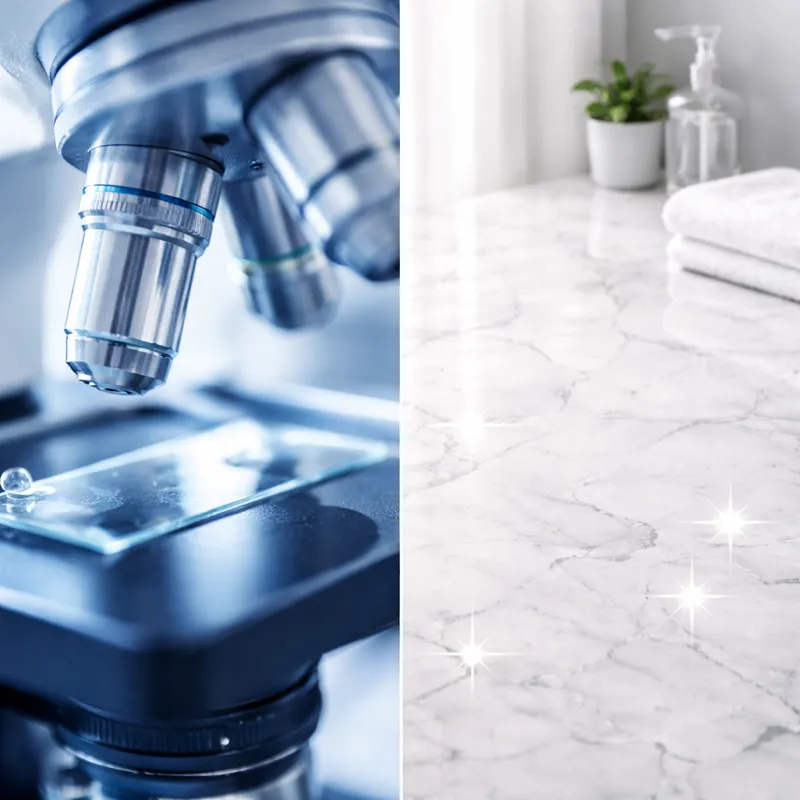
The Rose Canyon Micro-Dust Phenomenon: Why UTC Apartments Accumulate Faster Than Anywhere Else in San Diego
Rose Canyon Open Space is a 560-acre undeveloped canyon system that runs northeast from the I-805/I-5 interchange toward Genesee Avenue and the UTC apartment corridor. It is one of San Diego's largest urban canyon preserves — and its undeveloped floor is the primary source of the micro-dust that accumulates in UTC residential units at rates that confound residents who clean regularly.
The mechanism is predictable. Afternoon thermal winds — driven by the coastal heating differential between the Pacific and San Diego's inland areas — develop daily between approximately 2pm and 5pm. These winds pull loosened particulate matter from Rose Canyon's dry, undeveloped floor and push it northeast into UTC's residential density along Genesee Avenue, Governor Drive, and the apartment complexes adjacent to the UCSD campus. The canyon geography functions as a natural funnel, concentrating these particles into a relatively narrow residential corridor.
From May through August, the problem compounds significantly. Marine layer inversions — the coastal fog layer that San Diego residents know from “June Gloom” — create a warm air cap that traps the cooler marine layer below approximately 1,500 feet elevation. UTC sits at roughly 300 feet. Under inversion conditions, micro-particles that would normally disperse vertically into the upper atmosphere are instead retained at street level. They cycle through thermal wind patterns repeatedly, accumulating in residential spaces rather than dissipating.
The particles in question are classified as PM2.5 — airborne particulates at or below 2.5 micrometers in diameter. Invisible to the naked eye, they do not behave like visible household dust. They do not fall to floor level in ways that standard vacuum suction captures. Instead, they settle on horizontal surfaces at every height — electronics, shelving, textiles, HVAC intakes — and become re-suspended by airflow every time a door opens, an HVAC system cycles, or a person moves through the space. Biotech and research professionals working on the Genentech campus along Townsend Way, at Sanford Burnham Prebys Medical Discovery Institute on North Torrey Pines Road, and at UCSD's Skaggs School of Pharmacy consistently report 3–4× higher dust accumulation rates on laboratory-adjacent personal equipment compared to downtown San Diego facilities — a phenomenon that tracks directly with UTC's canyon-wind geography rather than any difference in cleaning frequency.
HEPA Filtration vs. Standard Vacuum Equipment: Why Lease Cleanings Don't Solve the UTC Problem
Standard upright and canister vacuums — including premium consumer models — filter at approximately 10 micrometers. This captures visible dust, pet hair, pollen grains, and other coarse debris effectively. PM2.5 particles are four times smaller than this filtration threshold. They do not get captured; they pass through the filter and exit the vacuum exhaust, distributed through the room with the added kinetic energy of the vacuum's airflow. A standard cleaning cycle in a UTC apartment does not reduce PM2.5 load — it redistributes it.
The Air Quality Standard That Most UTC Apartments Don't Meet
The San Diego County Air Quality Management District (AQMD) sets indoor air quality thresholds for multi-unit residential buildings at PM2.5 ≤35 μg/m³ over a 24-hour average. UTC apartments in proximity to Rose Canyon — absent professional HEPA cleaning — routinely exceed this threshold during summer inversion months when marine layer conditions concentrate canyon particulates at residential elevation. The AQMD threshold is not an aesthetic benchmark; it is the level at which PM2.5 exposure begins to produce measurable respiratory and cardiovascular effects with sustained exposure.
UCSD's School of Medicine Air Quality Research Lab, located on the UCSD Health Sciences campus adjacent to the UTC corridor, documents the relationship between sustained indoor PM2.5 exposure and respiratory inflammation in research populations. For UTC's demographic — many of whom work in biotech, pharmaceutical research, or UCSD's health sciences programs — this connection is immediately legible. They work with air quality data professionally. They understand what PM2.5 means in the context of occupational and residential health.
The practical gap: a standard lease cleaning for a UTC 2-bedroom apartment — non-HEPA vacuum, no steam, standard cleaning chemistry — typically runs $400–600 for a seasonal deep clean and leaves PM2.5 load entirely unaddressed. A professional deep clean with True HEPA equipment captures particles to 0.3 micrometers, well below the PM2.5 threshold, at a flat rate of $285–375 depending on unit configuration. For UTC residents, the math inverts what might seem intuitive: the higher-equipment service is the more cost-effective investment because it actually solves the problem.
The 6-Step HEPA + Steam Protocol That Actually Eliminates Rose Canyon Micro-Dust
Eliminating PM2.5 from a UTC apartment requires a sequenced protocol where each step prevents the previous step's work from being undone. Here is how Bravo Maids' Certified Cleaning Specialists approach a UTC deep clean:
True HEPA Pre-Vacuum (0.3μm Capture)
All horizontal surfaces — shelving, countertops, window sills, electronics stands, baseboards — receive a full HEPA pre-vacuum before any other surface work begins. This step is non-negotiable in sequence: any steam or wipe applied before pre-vacuuming redistributes surface PM2.5 into air rather than capturing it. True HEPA filtration (rated at 0.3μm, capturing 99.97% of particles at that size) removes PM2.5 from surfaces where it has settled.
275°F High-Heat Vapor Steam on High-Touch Surfaces
Steam at 275°F applied to electronics stands, light switches, thermostats, window sills, door frames, and kitchen surfaces breaks down the organic matter — skin cells, pollen proteins, fine particulate organics — that makes PM2.5 particles adhesive to surfaces. Without breaking down this organic binding matrix, micro- dust re-accumulates on the same surfaces within days of wiping. Steam breaks the adhesion cycle at the molecular level.
Microfiber Electrostatic Wipe-Down on Textiles
Curtains, lampshades, and upholstered furniture edges are wiped with electrostatic microfiber — material that generates a static charge attracting PM2.5 particles without re-suspending them. Standard cotton cloths and paper towels have the opposite effect on PM2.5, scattering particles into air turbulence rather than capturing them. Textile surfaces in a UTC apartment function as PM2.5 sinks; addressing them properly requires the correct material.
HVAC Duct Blower-Clear
UTC apartments rely almost entirely on central ventilation for air circulation — cooking exhaust, humidity regulation, and fresh air exchange all pass through the same duct system. PM2.5 accumulates on interior duct surfaces and is recirculated through the living space every time the HVAC system cycles. A duct blower-clear removes this accumulated layer from interior surfaces, eliminating the continuous re-suspension cycle that defeats surface cleaning gains within 24–48 hours of a standard service visit.
Secondary HEPA Post-Vacuum
Steam and wipe phases inevitably disturb some PM2.5 into air. A second HEPA vacuum pass following those phases recaptures any re-suspended particles before they re-settle. This sequencing — HEPA pre, steam and wipe, HEPA post — is the difference between a clean that lasts three to four weeks and one that degrades within days.
Air Purifier Placement Guidance
Bravo Maids cleaners observe HVAC airflow patterns during the service visit and can advise on optimal HEPA air purifier placement for your specific unit layout. Bedroom placement addresses the 7–8 hours of stationary exposure during sleep; living room placement handles the highest-volume daytime air circulation zone. This is a value-add recommendation, not a sold service — but it is specific to your unit's airflow, not a generic “put it in the corner” suggestion.
The UTC Dust Calendar: When to Deep Clean for Maximum Health and Property Protection
UTC's micro-dust problem is seasonal in intensity but year-round in presence. Cleaning timing relative to the annual wind and inversion cycle makes a material difference in how quickly PM2.5 re-accumulates after a professional deep clean.
Pre-Marine Layer Baseline
Before marine layer inversions form and intensify, dust particles disperse vertically rather than being retained at street level. A spring deep clean establishes a HEPA- cleared baseline — surfaces, textiles, and HVAC ducts reset — before the summer accumulation season begins. This is the most effective single annual cleaning window for UTC apartments.
Peak Accumulation Season
Rose Canyon thermal winds are most active, marine layer inversions are daily, and PM2.5 accumulation rates peak. Health-conscious residents — particularly those in biotech or pharmaceutical work, or with respiratory sensitivities — should consider monthly HEPA maintenance during this window. Electronics-dense households face additional risk from PM2.5 clogging cooling systems.
Post-Thermal Season Reset
Inversion layers break, thermal winds subside. But summer's accumulated PM2.5 has embedded in HVAC duct surfaces, textile fibers, and hard-to-reach areas. A fall deep clean before winter heating cycles activate is critical: heated air re-suspends trapped particles accumulated over three months of peak season. Without a fall reset, your heating system becomes a PM2.5 redistribution mechanism all winter.
Lowest Accumulation Season
UTC's lowest micro-dust season. Canyon winds are reduced, marine inversions are infrequent. Quarterly maintenance is adequate for most residents. The primary monitoring task during winter is HVAC filter condition — a blocked filter in a compact UTC apartment recirculates PM2.5 through the living space with every heating cycle, negating spring and fall cleaning gains.
What Professional Micro-Dust Deep Cleaning Actually Costs in University City
Flat-Rate Pricing for UTC Apartments
Flat-rate pricing. No hourly surprises. Recurring bi-weekly service qualifies for a 15% per-visit discount.
The flat-rate structure exists because condensed UTC apartments — most falling in the 650–950 square foot range — have predictable scope under the HEPA + steam protocol. Every horizontal surface in a 1-bedroom UTC unit receives the same treatment: pre-vacuum, steam, wipe, post-vacuum. Hourly billing creates uncertainty for a 4-hour service window; flat-rate eliminates it.
The comparison that matters: a standard lease cleaning for a UTC unit — non-HEPA vacuum, no steam, standard cleaning chemistry — typically runs $400–600 for a seasonal deep clean. It leaves PM2.5 load entirely unaddressed. A Bravo Maids deep clean at $285–375 uses documented PM2.5-rated HEPA equipment, 275°F steam, and the 6-step sequenced protocol described above. The lower-priced service does not solve the UTC problem. The higher-equipment service at a lower price point does.
For biotech workers whose employer offers a housing quality assurance stipend — a benefit offered by several UTC-area companies as part of recruitment and retention packages — a twice-yearly professional deep clean at $285–375 per visit is reimbursable against most stipend programs as a documented maintenance service. A written service confirmation is provided after each visit.
For UTC apartments and condos — whether you're managing a 1-bedroom near Genesee or a 2-bedroom biotech company housing unit — cleaning company in University City specializes in the HEPA + steam protocol designed around Rose Canyon's specific micro-dust patterns.
Frequently Asked Questions
Why do UTC apartments get dusty so fast?
Rose Canyon Open Space — a 560-acre undeveloped canyon system — sits directly upwind of UTC's apartment corridor along Genesee Avenue and Governor Drive. Predictable afternoon thermal winds (2–5pm) pull micro-particles smaller than 2.5μm from the canyon floor and push them northeast into UTC's residential density. Marine layer inversions from May through August trap these particles at low altitude rather than dispersing them vertically, creating a sustained dust accumulation effect that standard vacuums recirculate rather than remove.
What is micro-dust and why is it different from regular household dust?
Micro-dust refers to airborne particles smaller than 2.5 micrometers in diameter — the PM2.5 classification used by the EPA and AQMD for air quality monitoring. Unlike visible household dust (particles ≥10μm that vacuums can capture), PM2.5 particles are invisible to the naked eye and small enough to pass straight through standard vacuum filtration systems, which then expel them back into the room with added turbulence. True HEPA filtration captures particles down to 0.3μm — the only equipment standard capable of physically removing PM2.5 from interior air.
How much does a professional deep clean cost in University City?
A UTC deep clean for a 1-bedroom/1-bathroom apartment runs$285 as a one-time flat rate. A 2-bedroom/1-bathroom unit is $300, and a 2-bedroom/2-bathroom is $375. Flat-rate pricing means no surprises for a standard 4-hour service window. Bi-weekly recurring service qualifies for a 15% per-visit discount and prevents micro-dust accumulation between services — the most cost-effective approach for year-round UTC air quality maintenance.
How often should UTC apartment residents get a professional deep clean?
Twice yearly minimum: once in spring (March–April, before marine layer inversions form) to establish a pre-season baseline, and once in fall (September–October) to clear summer's accumulated PM2.5 before winter heating cycles re-suspend trapped particles. Biotech workers, residents with respiratory sensitivities, or anyone with significant electronics or high-value textiles may benefit from monthly HEPA maintenance service given UTC's sustained proximity to Rose Canyon's thermal wind corridor.
Book a free UTC dust assessment — our Certified Cleaning Specialists walk the unit, assess your dust exposure vectors, and recommend a seasonal maintenance schedule.
Ready for a Cleaner Home?
Book your first cleaning today and discover why San Diego families trust Bravo Maids for a healthier, happier home.
Family-owned · Free quotes · Flexible scheduling · 100% satisfaction guaranteed